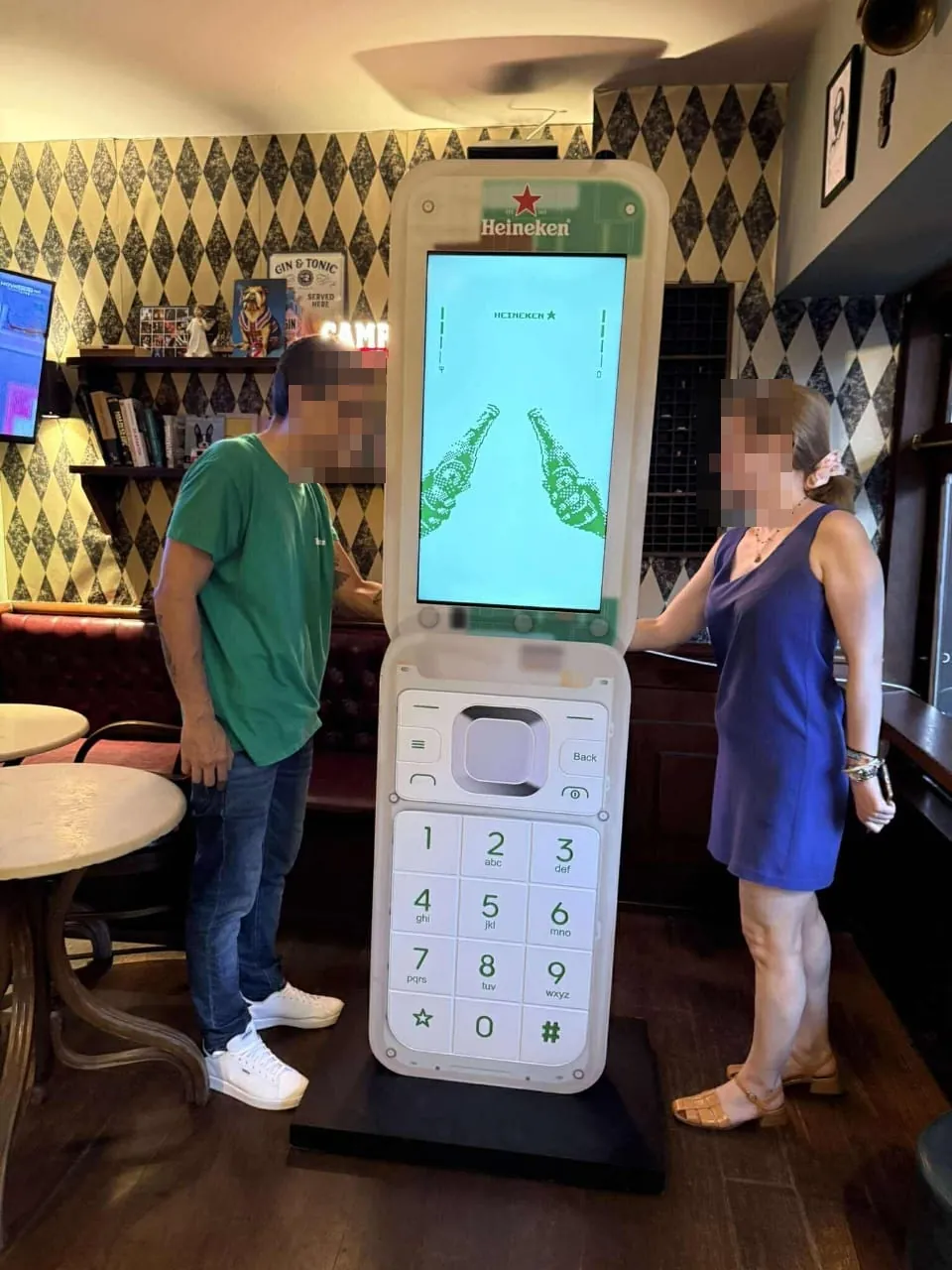
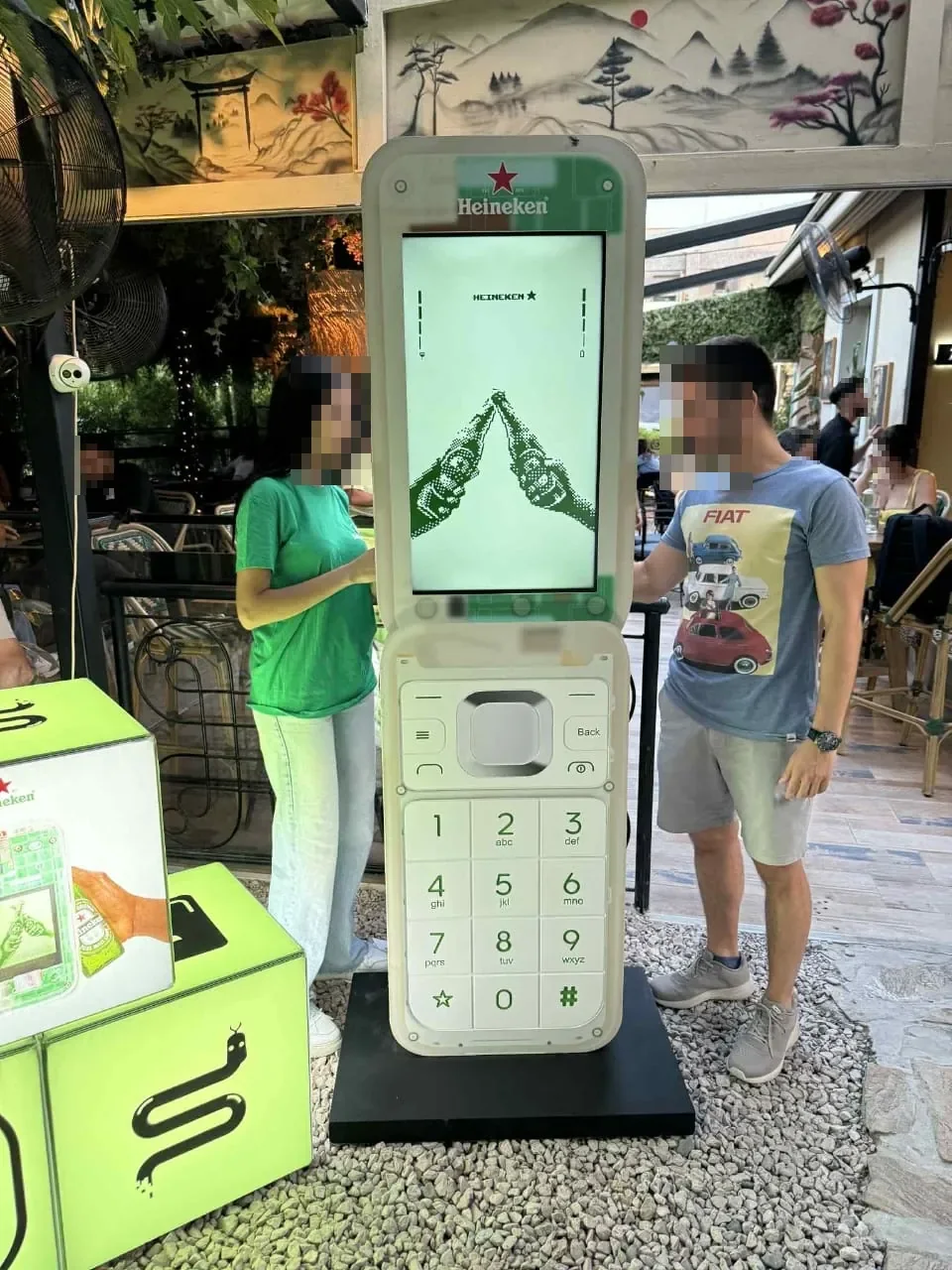
The Heineken x Nokia "Boring Phone" campaign had a simple idea: a life-size Nokia that runs a prize draw every time someone clinks a Heineken in front of it. The agency running the tour was taking it through bars and pubs across Greece for a summer, and asked us to build what made the phone work: the hardware that spots a cheers and the software that turns it into a draw.
Two units went out. Over one summer they visited 48 bars and pubs, often different venues on the same night, and ran more than 19,200 draws without a single hardware or software incident.
What's inside
Each phone holds a Raspberry Pi running a self-hosted Python app on Linux, wired through GPIO to an IR motion sensor. The screen runs a SvelteKit front end, with WebSockets carrying events from the sensor to the screen.
When the sensor sees movement, the app checks it before firing a draw. Motion events are validated and debounced, so a crowd brushing past doesn't count as a cheers.
The hard part was the room, not the sensor
We built and tested both units in the UK, then shipped them to Greece to fit a casing we never got our hands on.
Once there, the phones would be run by bar staff, and every bar is different: the lighting, the crowd, the layout. Set the sensor wrong and the phone either ignores a cheers or fires every time someone walks past. Forty-eight venues meant forty-eight different rooms to tune for.
The people in those rooms weren't developers, so tuning had to be something they could do in seconds.
A dial, not a laptop
The answer was a physical sensitivity dial on each unit. At each new venue, the operator turned the knob until the phone caught a cheers and ignored passers-by. It needed no laptop and no config files.
Everything else came from the same question: what does the person behind the bar need?
- One-screw mounting, so operators could fit the unit and move it between venues on their own.
- Straight into kiosk mode on power-on, so the phone was ready as soon as it was switched on.
- Live prize admin, so operators could adjust prize stock through the night without stopping the experience.
- Remote access and over-the-air updates, so we could diagnose and patch from the UK if anything went wrong.
How the summer went
Each new venue needed a quick turn of the dial, as planned, and the operators handled every one themselves. The draw ran without an incident for the whole tour. Remote access sat ready from the UK the entire time, and nobody needed it.
The agency singled out the documentation and the operator controls as the stand-outs of the delivery.
What it means for an agency
We designed the hardware and the software together from day one, around the people who would run it on the night. That one question decided the sensor, the cable lengths, the dial, the admin panel and the remote access.
The full detail is in the Boring Phone case study.
If you've got a 2027 brief with hardware in it and a fixed date, send it over and we'll tell you how we'd build it.